Introduction
Aim: You will learn the skills and know the tasks you need to perform before flying, to ensure that you and the aircraft are safe and fit to fly
What do we know?
- Has anyone here flown a glider before?
- What was done to prepare for the flight?
Pre-requisite Skills
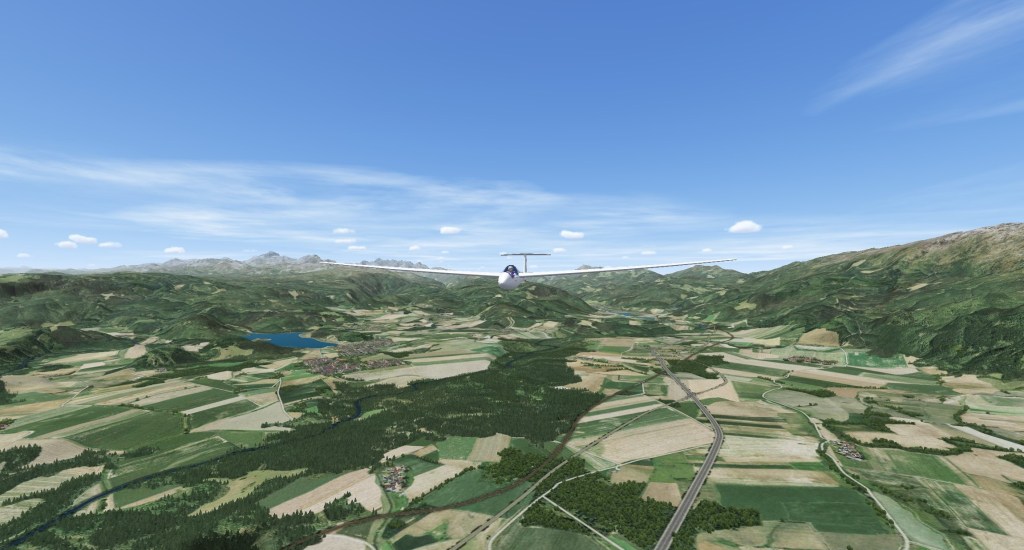
Lookout
Self-briefing for students
Video demonstration of lookout. Mute the volume to miss the commentary.
The Clock-face & Visual References
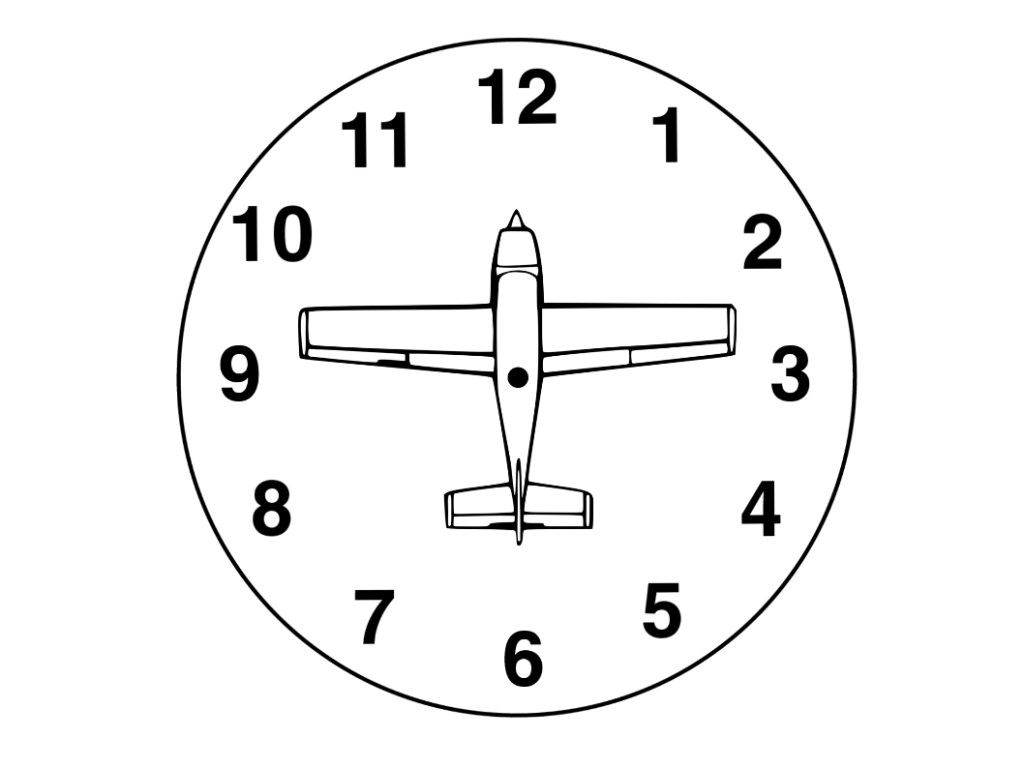
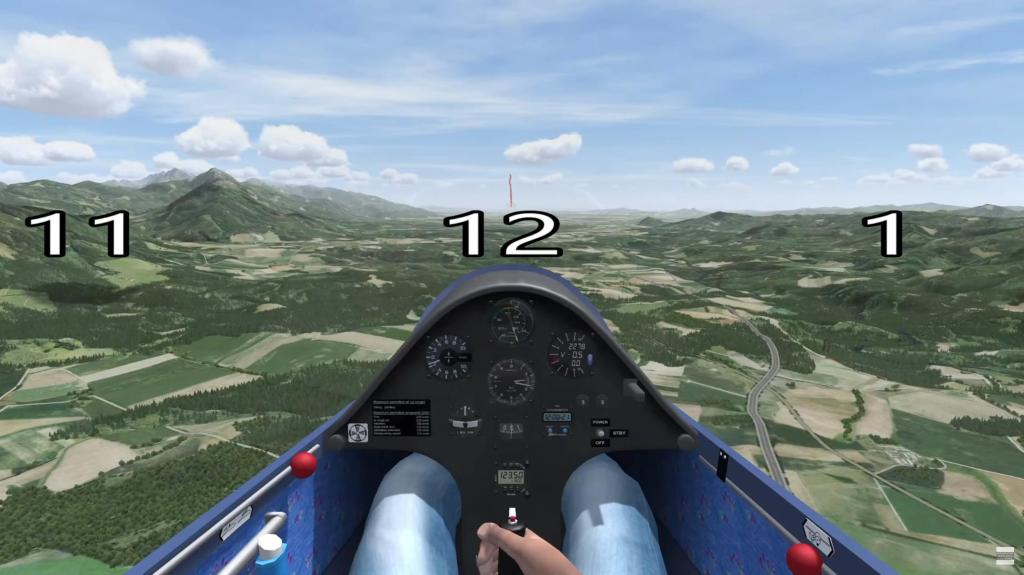
Visual References
Usually fixed ground features, e.g.
- Flying towards a peak, or along the valley
- Staying left of the railway line
- A motorway junction
Useful for communication with another pilot, identifying airspace boundaries, finding a Turn Point (by cross-reference to a chart), etc.
Self-briefing for students
Video demonstration showing use of the clock-face and visual references. Mute the volume to miss the commentary.
Passing Control
- “You have control” / “I have control”, and take control
- “I have control” / “You have control” and release control
- Following through
Self-briefing for students
Video demonstration showing a typical dialogue when passing control. Mute the volume to miss the commentary, although in this case it makes sense to listen to it.
Daily
The Morning Briefing
- Weather
- NOTAMs
- Ops
Daily Inspection
- The glider is fit to fly
- The glider is equipped to fly
- The glider is compliant with laws and rules: e.g documentation
- A requirement of the BGA
- Do Not Disturb!
Before each Flight
Outside the Glider:
Pre-flight Briefing
- Purpose of the flight
- How it will be conducted
(A) Aircraft walk-round Inspection
- A quick visual check that all appears well
(B) Ballast check
- Check pilot weight(s) against the placarded limits
- Add / Remove weights as required
(C) Controls check
- Can the controls be moved fully and freely, and do the control surfaces move as expected?
(D) Dollies removed
- Rudder Lock
- Tail Dolly
- Wing Dolly
(E) Environment
- What’s happening around you that might affect your take-off, flight and landing?
- Weather
- Wind
- Field conditions
- Sources of Lift
- Airborne activity nearby, e.g. paragliders
Equipment check
- Parachute
- Cushion(s) – (Confor)
- Sun Hat
- Sunscreen
- Jacket
- Gloves
- Shoes
- Food
- Drink
- Logger
- Chart / GPS
- Oxygen
IMSAFE
- Illness
- Medication
- Stress
- Alcohol
- Fatigue
- Food (& Drink)
- Emotion
Inside the Glider:
(C) Controls
- Full and free movement
- Performed after the pilots are strapped in
(B) Ballast
- Confirm weights are within placard limits
(S) Straps
- All points Connected (can be 4 or 5)
- and Straps are Tight
(I) Instruments
- Condition
- Functioning
- Settings
(F) Flaps (if fitted)
- Full range of movement and flaps are operating
- Set correctly
(T) Trimmer
- Full range of movement
- Set for Approach Speed (in case of launch failure)
(B) airBrakes
- Confirm they open equally, fully
- Closed and Locked
(E) Eventualities
- Consider anything that might affect your flight, and especially the launch and options in case of a launch failure.
(C) Canopy
- Closed and Locked
- Resists upward pressure
Recap
- Who’s responsibility is it to look for other aircraft whilst flying?
- How is the Lookout performed?
- Where is 12 o’clock?
- How does the instructor pass control?
- What do you do when the instructor takes back control?
- How can you help with a Daily Inspection?
- What checks will you perform before flying?
TEM
Threats
Distraction, e.g. during rigging and pre-flight checks
Mitigation:
- Interruptions during rigging and pre-flight checks (including Daily Inspections) are unacceptable. If interrupted, repeat the checks.
- Stay focused on the task in hand.
Collision
Mitigation:
- Lookout
Adverse Student reaction in flight
Mitigation:
- Monitoring by Instructor.
- Student – make the Instructor aware if you feel unwell or uncomfortable.
- Cut the flight short if necessary; take small steps to acclimatise.
- The Instructor will guard the controls.
Errors
Incorrect ballast
Mitigation:
- Check the pilot’s understanding of the weight and balance placard, and ensure ballast is appropriately fitted or removed.
Getting out of range, or losing sight of the airfield
Mitigation:
- Familiarisation with, and monitoring of, local landmarks.
Confusion over who is flying the glider
Mitigation:
- Precise use of Control Handover protocol.
 glidingschool.com