Introduction
Aim: This briefing provides the basics of ridge soaring, addressing safety, the rules and the fundamental techniques. It is intended for pre-solo pilots, under instruction, who may have access to a local ridge when they are early solo. There are many excellent sources of information for more advanced ridge soaring pilots, often targeted at those flying specific ridges, not least due to their individual nature.
What do we know?
- Who here has flown on a ridge?
- What is different about it?
What is it, and Why do it?
Video of some (mountain) ridge soaring
- Waiting for a Thermal
- Access to Wave
- Transit along its length
- To extend the flight
- And it’s Fun, when kept safe.
Safe Flying & Rules of the Ridge
This briefing is a subset of the knowledge that is available – refer to:
The basic Rules for Ridge Soaring
- Remain clear of other gliders (including para-gliders, hang-gliders)
- The glider with the ridge on its right has priority.
- The glider with the ridge on its left gives way, by turning away from the ridge.
- Every pilot has a responsibility to avoid collisions.
- All turns should be made away from the ridge.
- Overtake with caution, ideally between the other glider and the ridge.
- Subject to local rules, thermal turns should be made at a minimum of 800′ above the ridge top.
The Hill Soaring Exemption
- Where reasonably possible, remain 500′ clear of people and property.
- Do not fly lower than necessary to utilise the soaring conditions.
- Never fly close to, towards, or directly over any person on the ground.
Where’s the Lift?
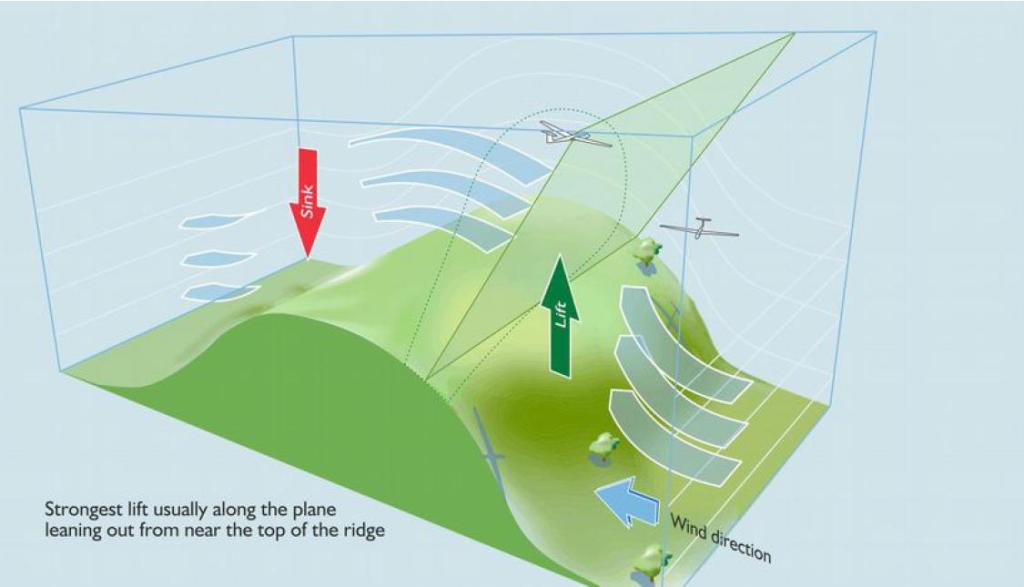
Lift projects upwards, upwind
Generally, we expect the wind to blow onto the windward face of the ridge, over the top and down the lee side. The strongest lift would be a little below the crest, projecting some hundreds of feet upwards and upwind of the ridge.
- If the ridge is long and evenly shaped, this may hold true.
- Steeper slopes create stronger lift.
But it isn’t always there
There may be less lift, no lift, or even sink, on a windward slope:
- The ridge is uneven
- A stepped, lower ridge or hillock upwind causes turbulence
- A break in the ridge encourages air to flow sideways towards it
- Wave above can suppress the ridge lift, or create sink
- Thermal streets too
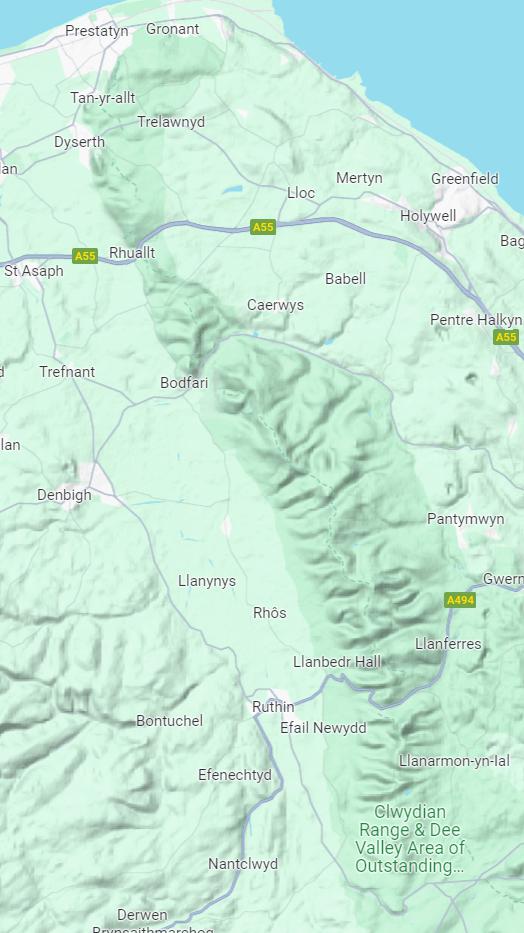
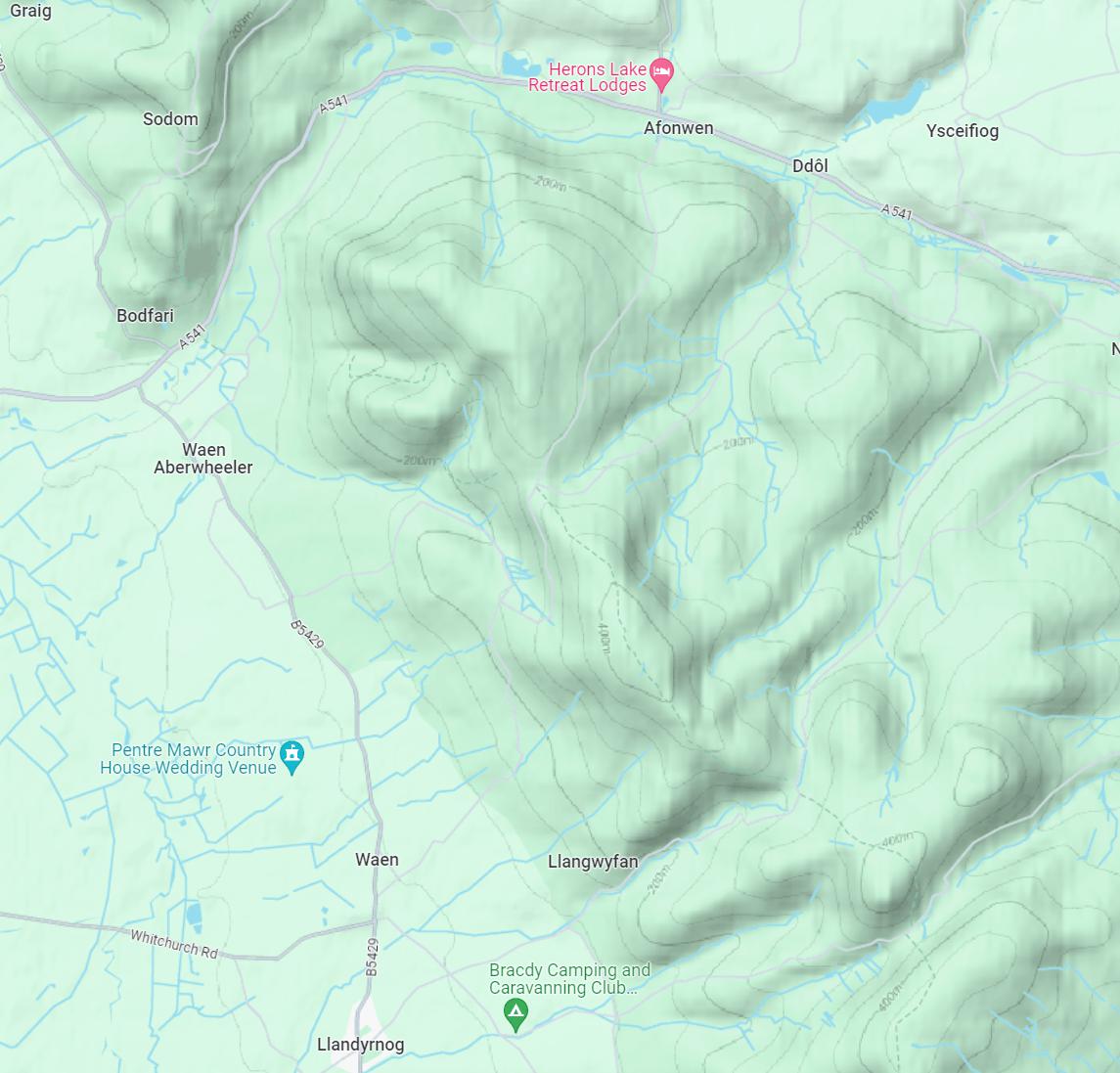
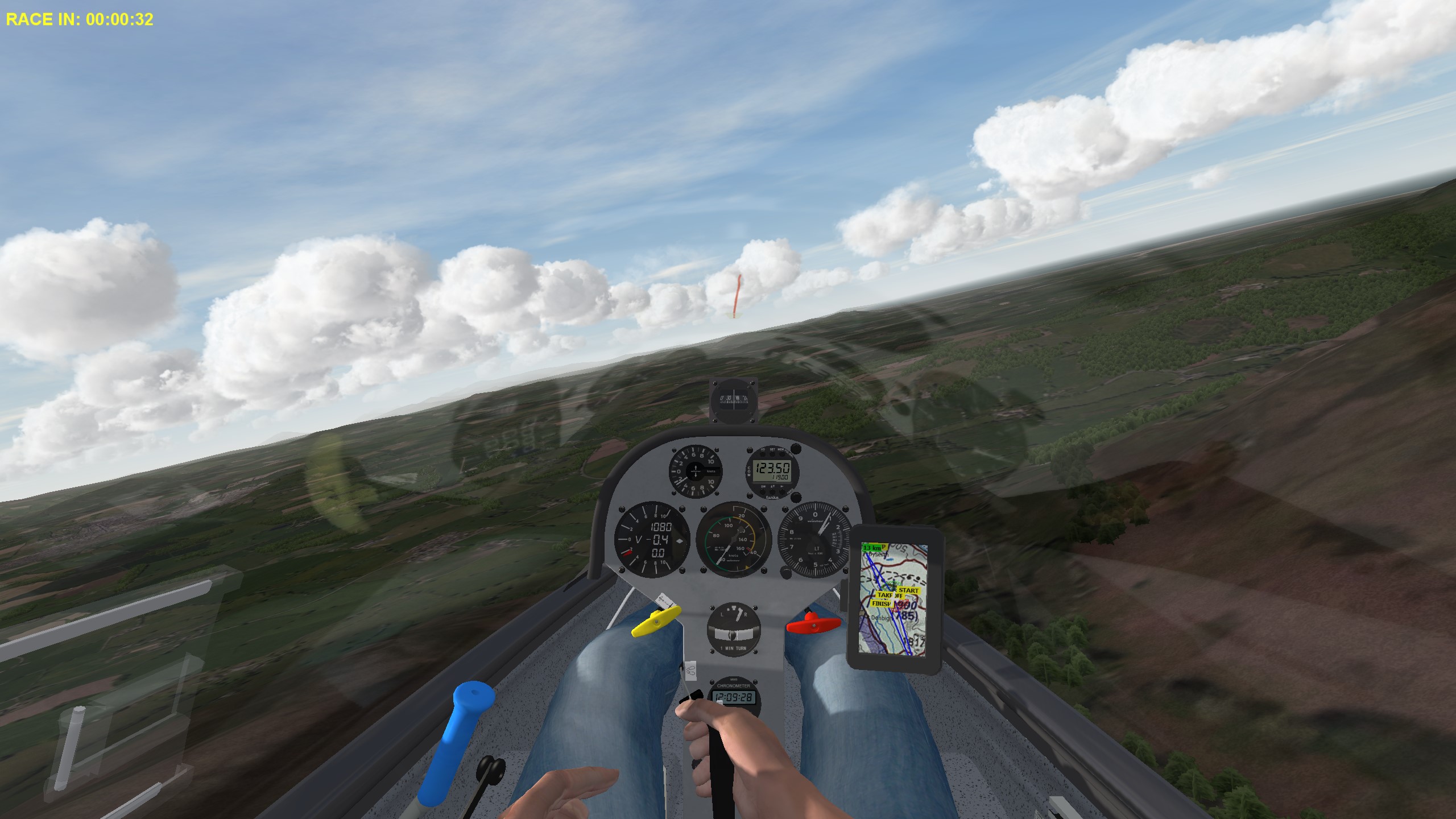
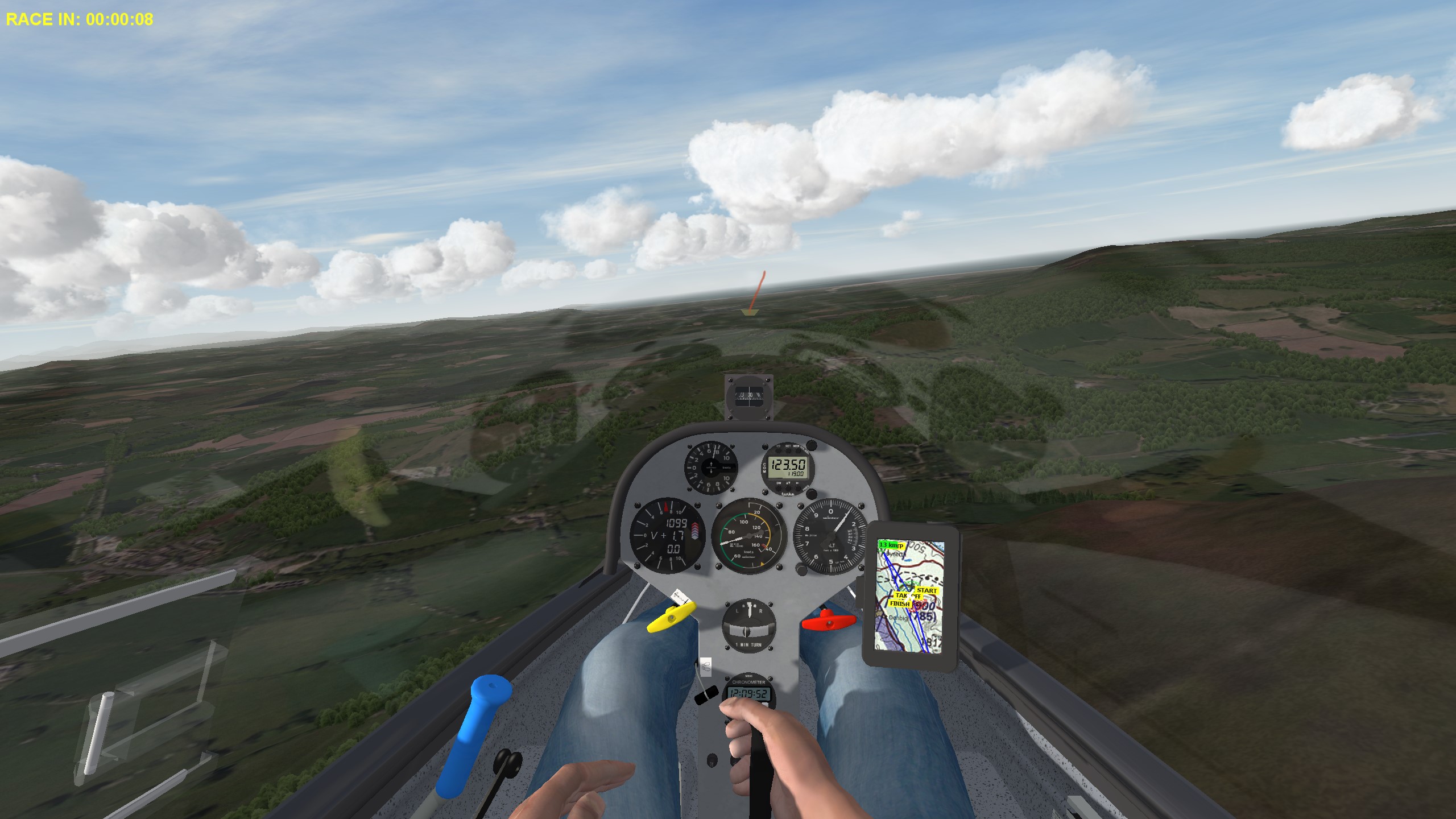
Sink behind a Spur
In these pictures, 24 seconds apart, Sink of 2kts down becomes 7+kts up. The glider appears to be on the same part of the ridge. But the first is above a gulley, behind a smaller ridge to windward. The second is in clear air.
And if there is no Lift: Options
You must always be prepared for ‘no lift’, or worse:
- Always have height, or speed, in hand
- Identify an exit route at all times
- Know where you can land
- Hill-top sites may facilitate a ‘straight-in’ approach
- Set a lower height limit at which you will cease ridge-soaring
- Slowing down may allow you to climb, but beware turbulent conditions: do not get low and slow.
Lookout
Where are the Risks
- All around
- Low sun
- Misting canopy
- Cloud, Rain & Snow
- Other hill soarers: not only on the hill, but above and downwind, possibly even upwind.
- Impacting Terrain & Obstacles
Scan Cycle
- A lot of looking ahead,
- Above and below
- Also monitoring speed, wind direction and vario (audio)
Radio
- More communication perhaps, when close to other gliders
- Use a ‘Cross Country’ frequency
Electronic Conspicuity
- FLARM
- When using FLARM, its 12 o’clock, or Ahead, is based on the gliders’ Track.
- Track can be very different to Heading, for both parties. Moreso in stronger winds.
Speed Control
- Speed is your friend
- The Horizon isn’t: monitor the ASI
- Turbulence can be extreme
- Vertical gusts lead to stalls
- Vertical gusts while turning lead to spins
Other Pre-requisites and Skills
- Know your glider, and its performance at high angles of bank
- Fly accurately at high angles of bank
- Spatial awareness
- Field Landing skills and currency
- Ability to access the required information from your vario (Netto, Wind Direction)
- Prepared to loiter on the ridge, for some time (as a minimum: ventilation, comfort, hydration and pee-systems)
- Let people know your plans – be prepared for a retrieve
- Know when to push on
- Know when to stop
- Patience
Thermalling off the ridge
- Make S-turns, into wind
- Climb
- Thermal turns when at least 800′ above the ridge
- Beware downwind drift
- Never turn into the hill!
- Sometimes it is easier to push forward into wind, under lift.
Take Advice
Ask the locals, and take advice from the Senior Instructor
- Each ridge is unique
- and may behave differently in different wind directions
- Wave influence
- Many sites publish local guidance and videos
Recap
- How low can you go on a ridge?
- Can you fly towards people to impress them?
- How is the Scan Cycle modified?
- Is FLARM useful on a ridge?
- How might a glider stall or spin when ridge soaring?
- Who do gliders give way to on a ridge?
TEM
Threats
Collision with other gliders
Mitigation:
- Maintain thorough lookout. Avoid confliction by taking avoiding action early.
- Use of Electronic Conspicuity as an aid.
Reduced visibility, due to hill fog, weather.
Mitigation:
- Clean the canopy and be aware it can become opaque.
Errors
Collision with Terrain or Obstacles
Mitigation:
- Manage your height responsibly.
Over-enthusiasm
Mitigation:
- Be aware of, and follow, the Soaring Protocols.
BGA’s Managing Flying Risk – Hill, Ridge and Mountain Soaring
 glidingschool.com