Introduction
Aim: To introduce you to the terminology and basics of flight, before going to look at a glider for the first time.
What do we know?
- Who has experience of flying?
- What would you like to know about gliders before getting into one?
Parts of a Glider
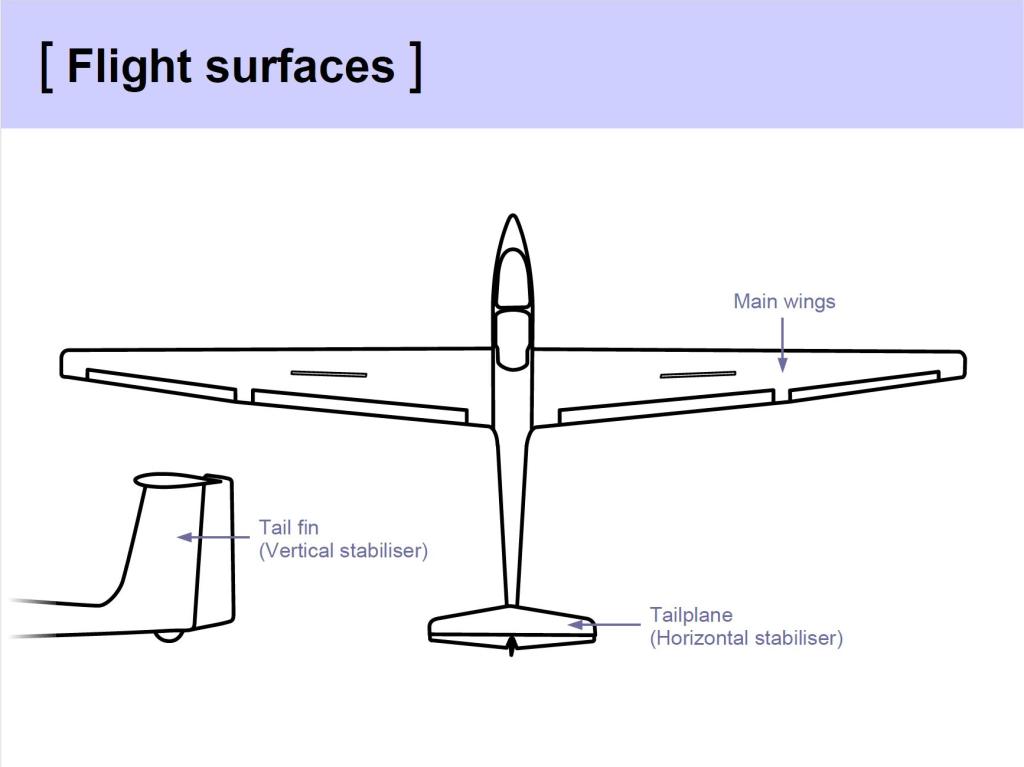
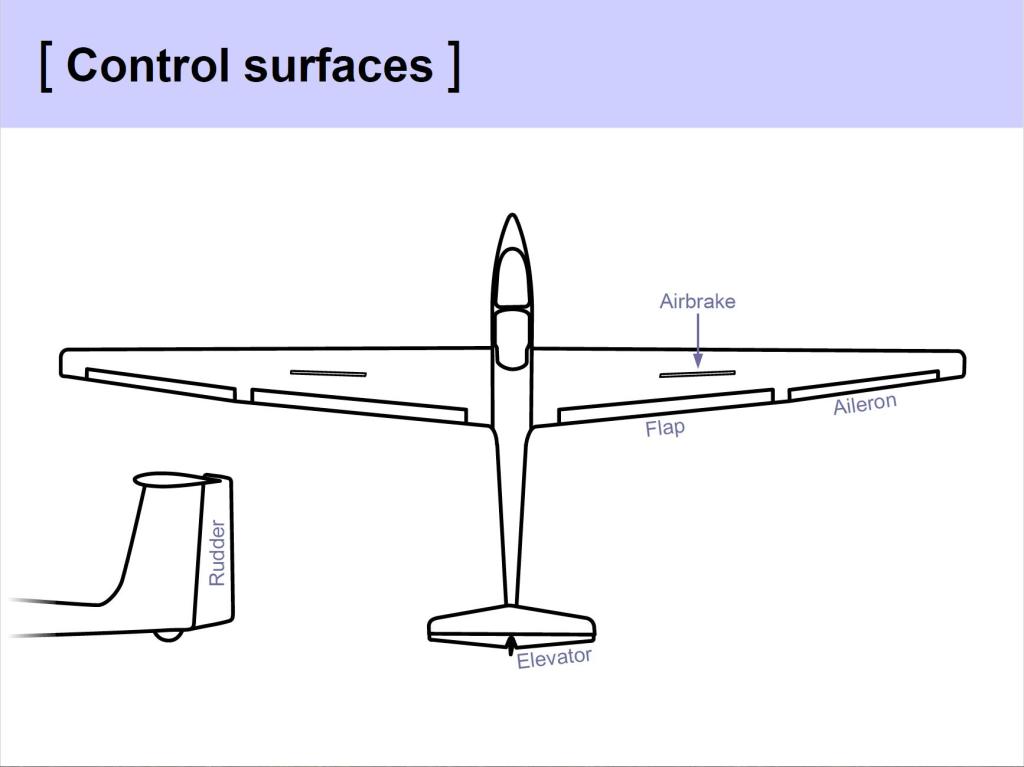
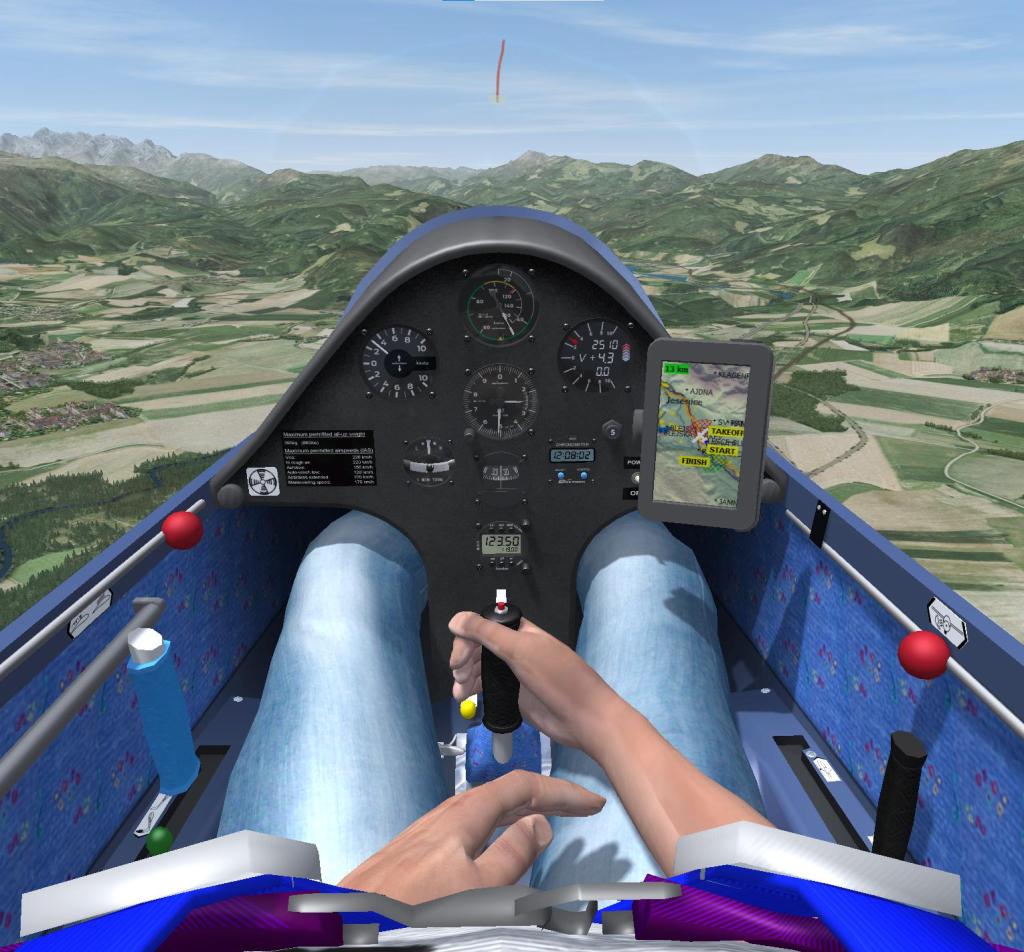
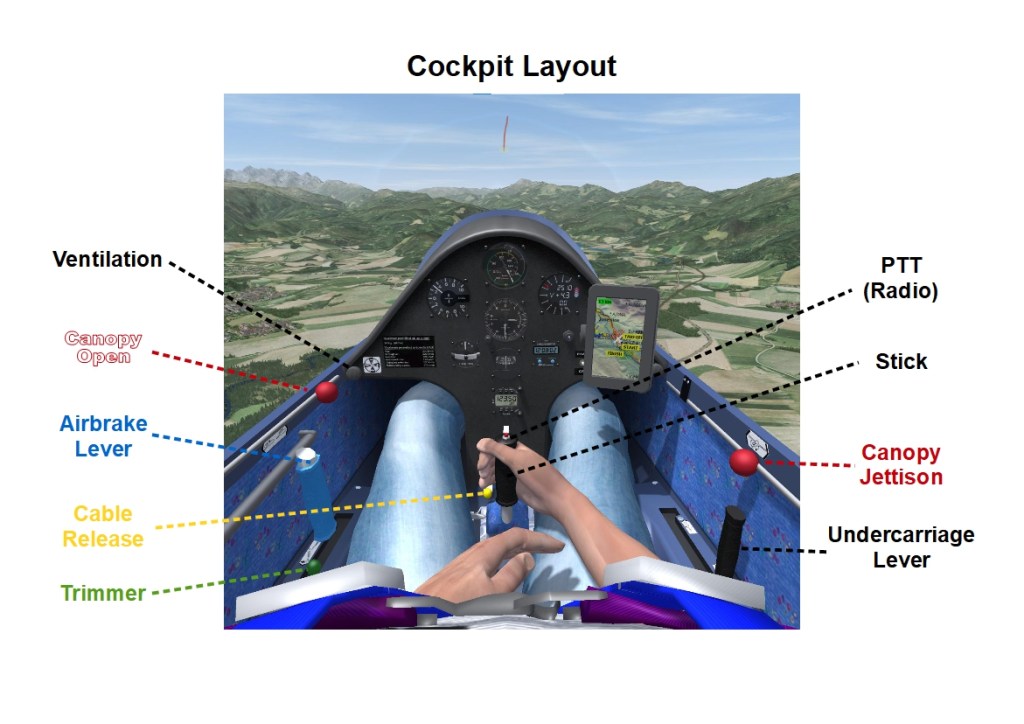
The Cockpit, Instruments and Controls
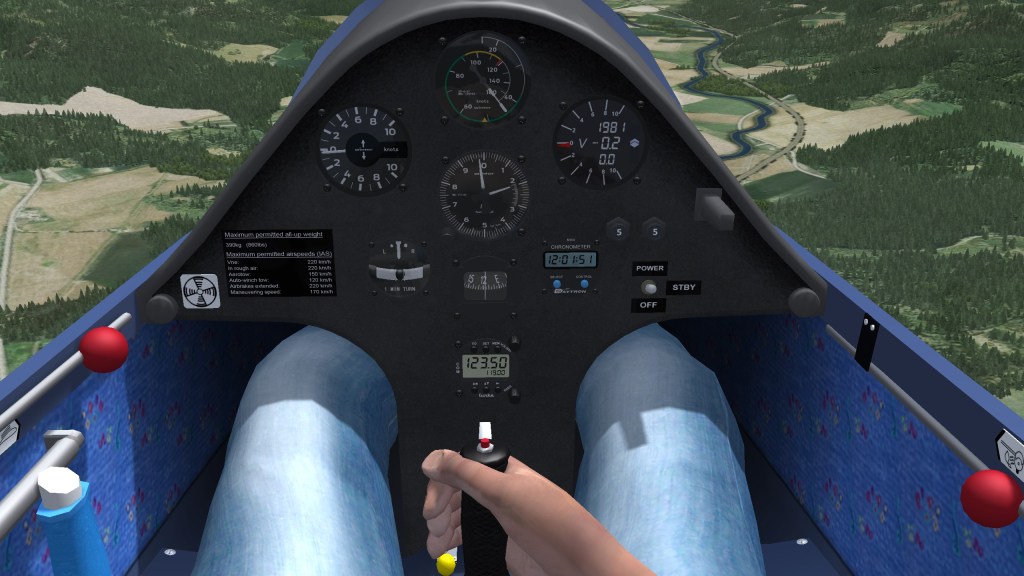
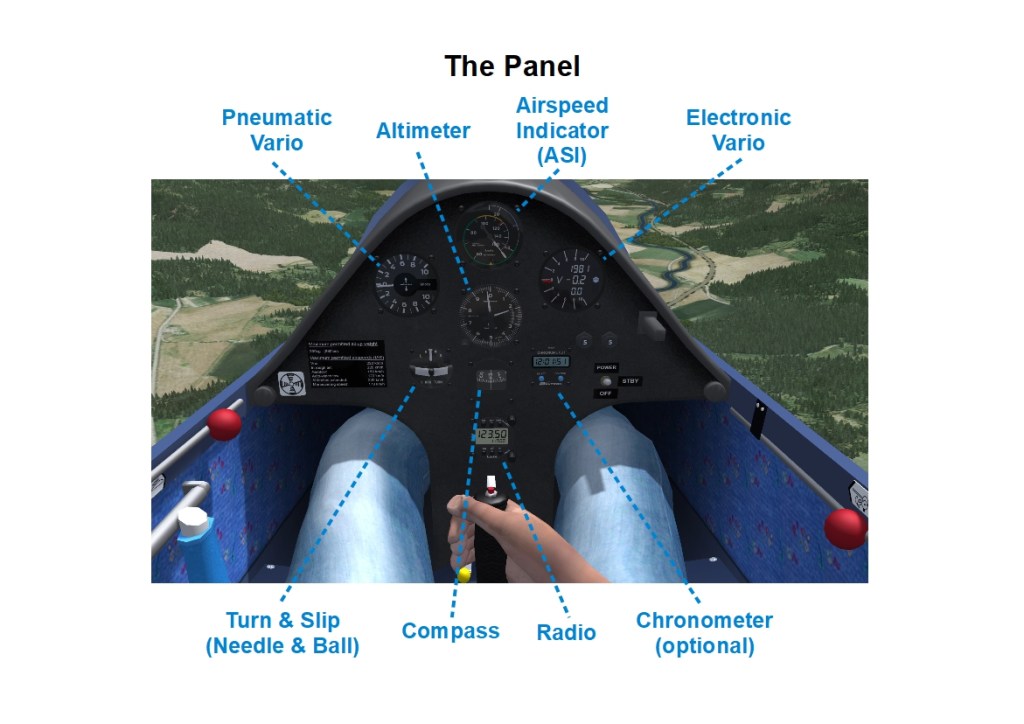
What effect do the controls have?
Principles of Flight – the Basics
How a wing works
Gliders are (almost) always descending through the air, but do so very efficiently. A little descent allows a lot of forward movement. This is often illustrated as airflow over and under the wing.
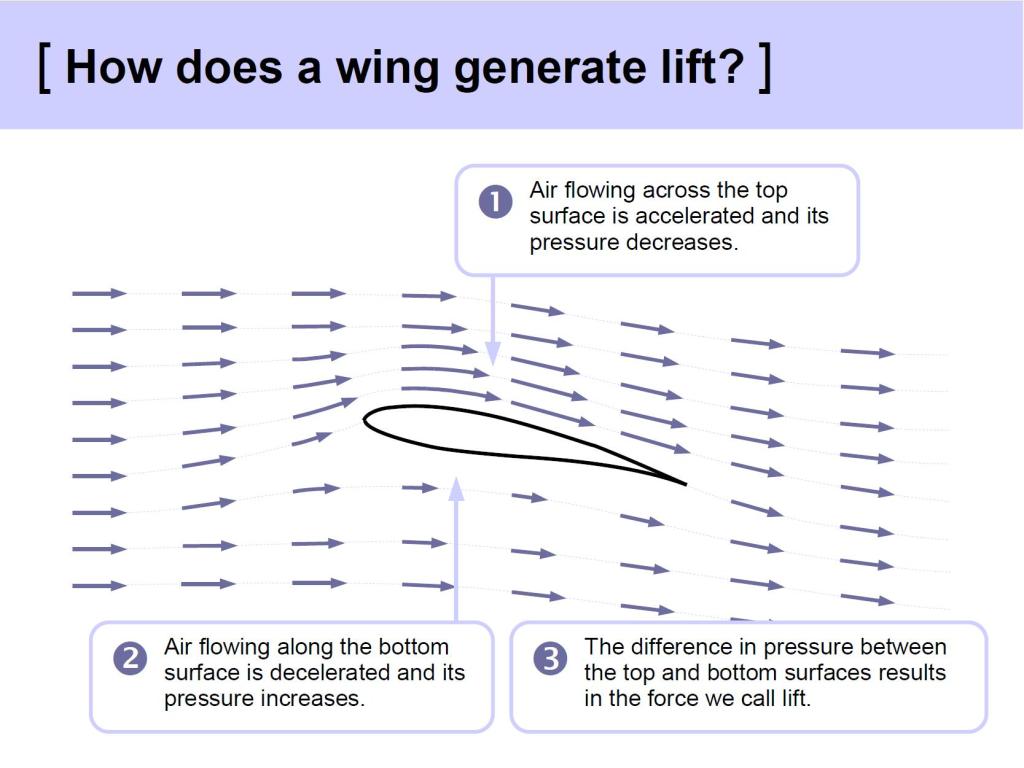
The result of this ‘airflow’ around the wing’s aerofoil is:
- Low pressure above the wing
- High pressure below the wing
- A deflection of the air downwards
The net result is a force upwards: Lift
Some Terminology
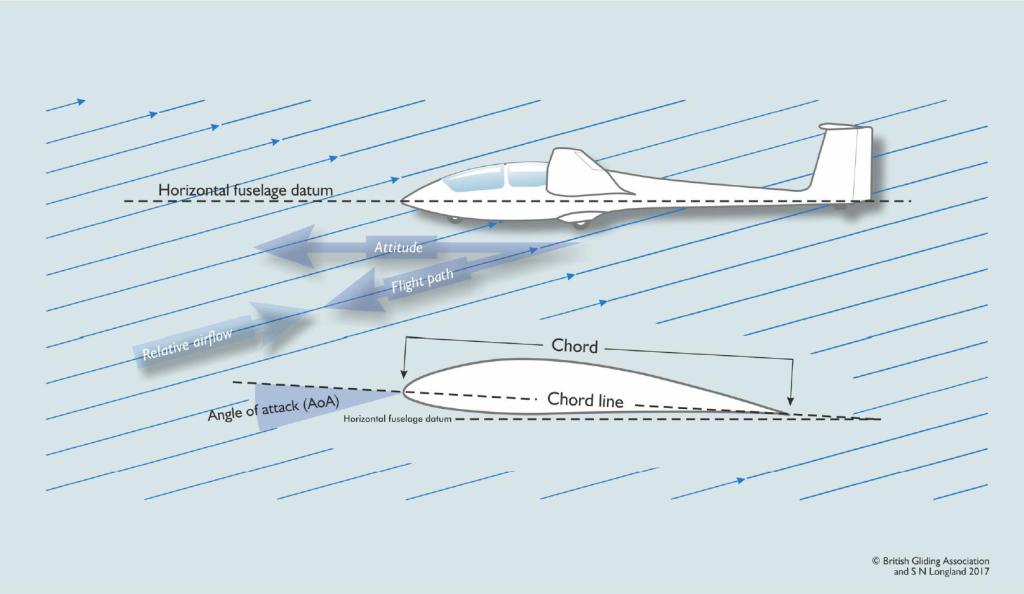
Altering Lift
The amount of lift generated varies by changing
- The angle of attack
- The speed of the airflow
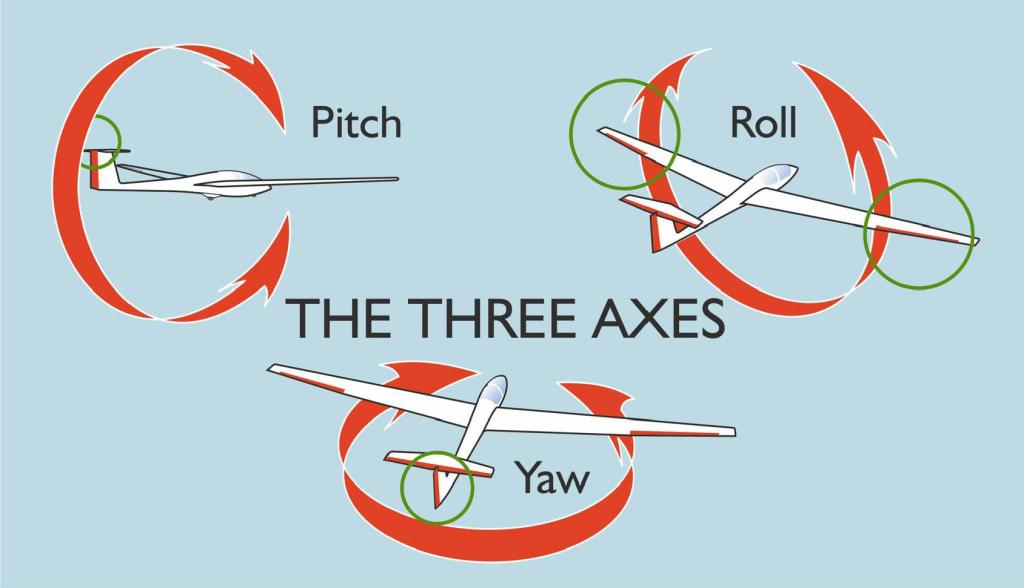
How the controls work (Pitch, Roll, Yaw)
- The Wings, Tailplane, and Fin all have an aerofoil.
- The aerofoil of the Tailplane and the Fin are symmetrical, so when in a neutral setting, they act only to stabilise the glider, and do not generate ‘lift’.
Illustration
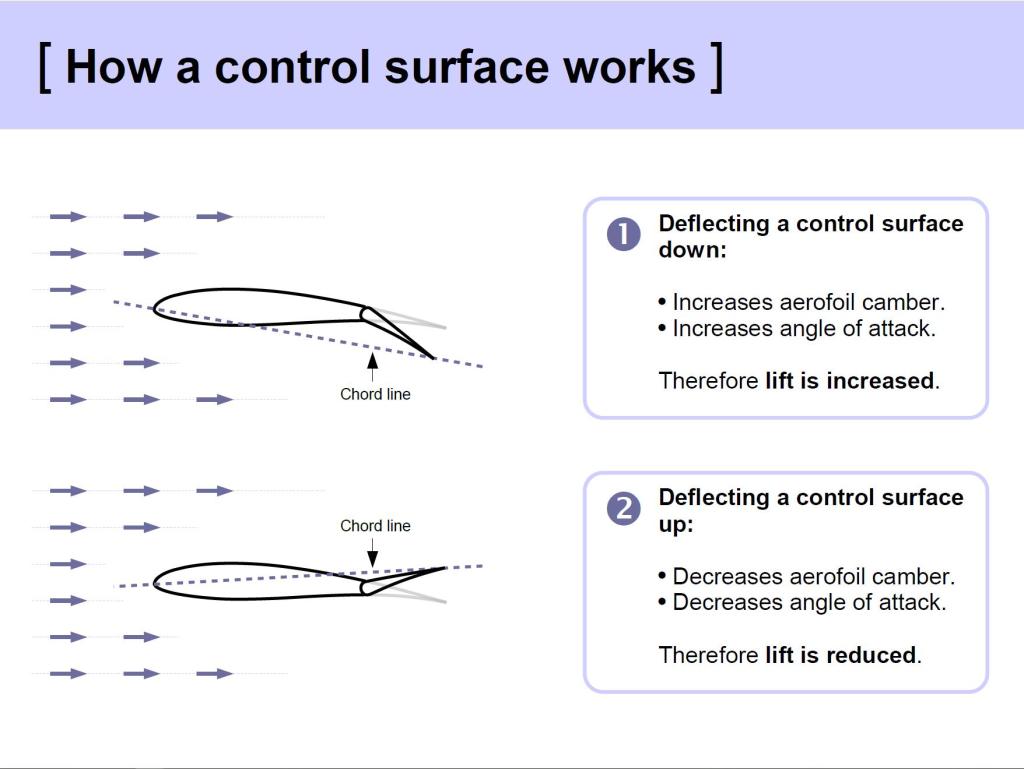
- The Control Surfaces are moved by the stick and rudder pedals to change these aerofoils, creating:
- a vertical force at the ailerons
- a vertical force at the elevator
- a sideways force at the rudder.
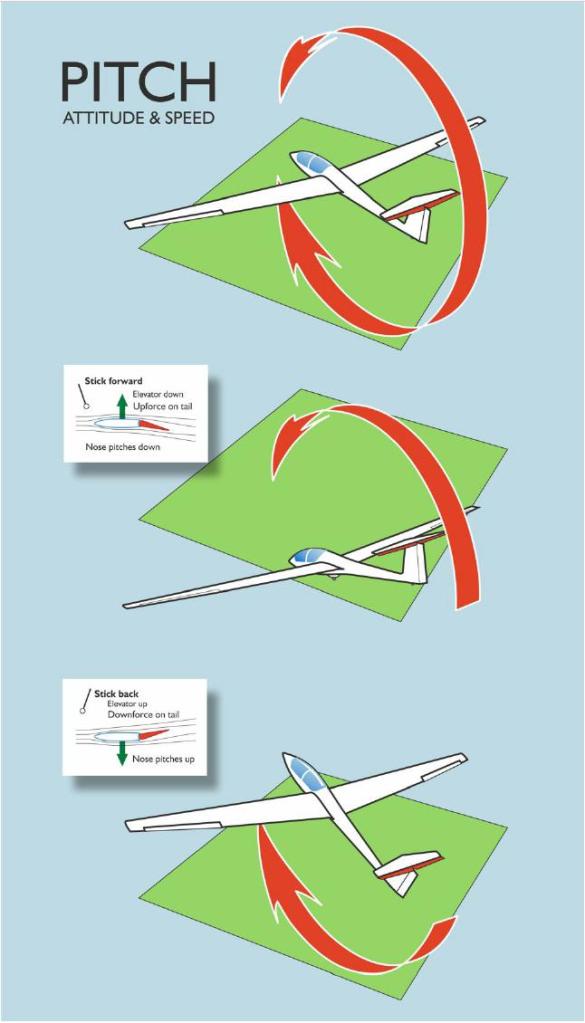
Elevator – Pitch
- Stick forward…
- Elevator goes down,
- generating an upward force.
- The nose of the glider goes down.
- And vice versa.
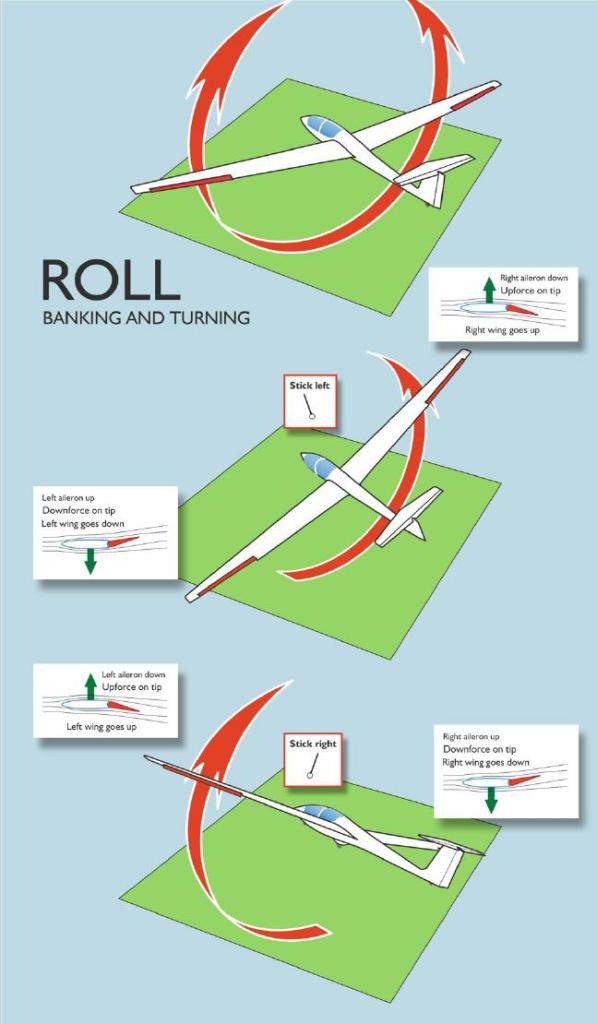
Ailerons – Roll
- Stick moved to the left…
- Left aileron goes up and right aileron goes down.
- The right wing generates more lift and the left wing generates less lift.
- The glider rolls to the left.
- And vice versa.
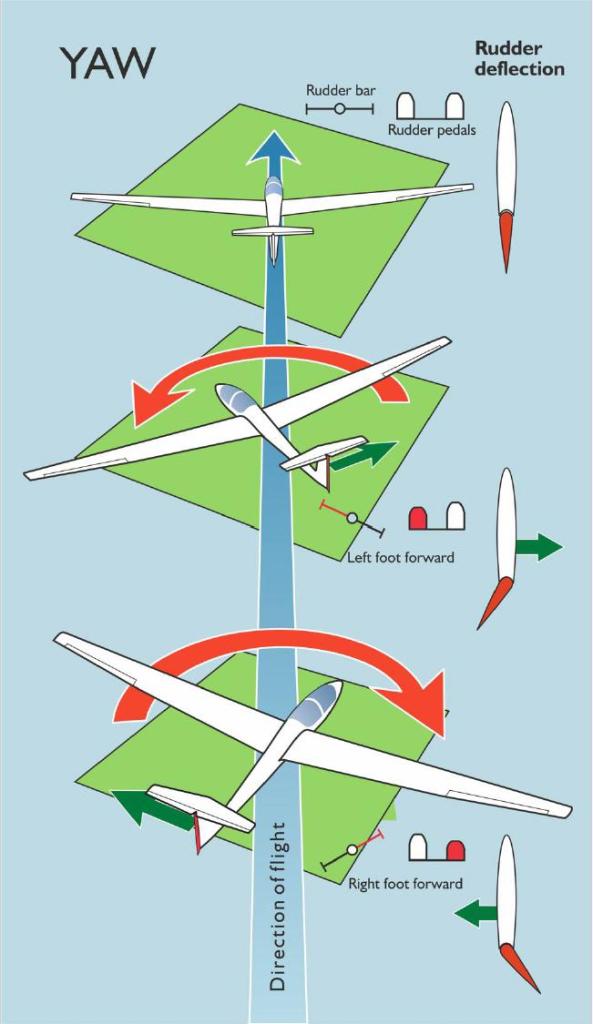
Rudder – Yaw
- Left pedal forward…
- Rudder moves left,
- generating a sideways force to the right.
- The nose of the glider yaws left.
- And vice versa.
The Centre of Gravity… and why weight matters!
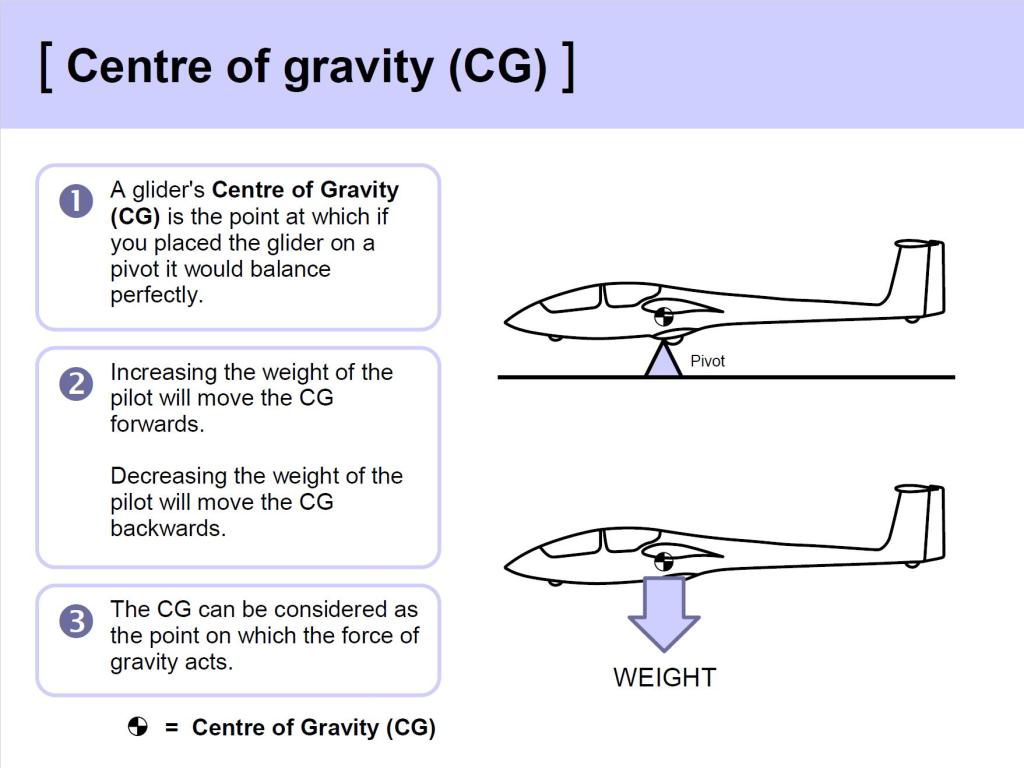
- The Centre of Gravity is the point on which the glider would balance (fore and aft)
The CoG must be within a pre-defined range for the elevator to be effective.
The CoG position is affected by the weight of the pilots. Add ballast weights if necessary.
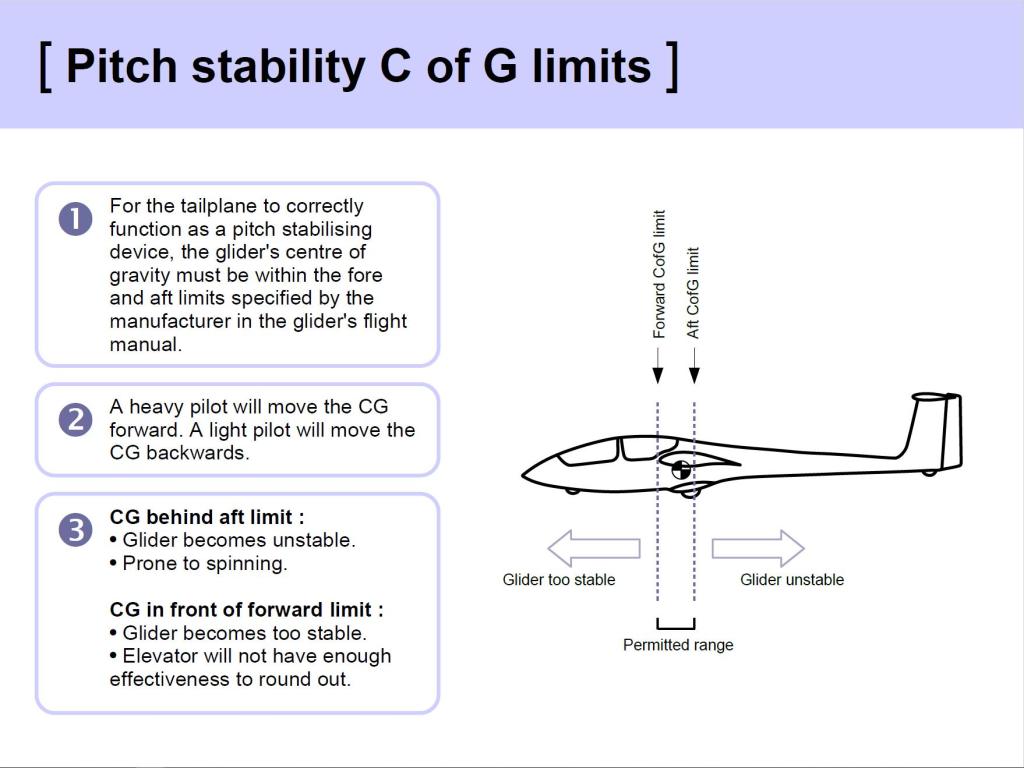
CoG affects Pitch Stability
- Heavy Pilots move the CoG forwards: the glider may be unrecoverable from a dive.
- Light Pilots move CoG backwards: the glider will be prone to spinning.
Canopy Handling
- Fragile and Expensive
- Cleaning and Touching
- Handling Points
- Opening & Closing
- Always have someone responsible for it: “My canopy”
- Comply with local procedures for leaving a glider unattended: e.g. right wing down
Glider Handling
- Wooden gliders have Strong Points
- Holding a Wing
Let’s look at a Glider (Walk-round)
- Construction (GRP vs “Wood”)
- Handling Points
- Parts & Control Surfaces
- Canopy
- Ingress & Egress
- Harness: Fit & Adjustment
- Instruments
- FLARM
The Parachute
- Inspection
- Handling
- Donning & Doffing
- Bailing Out
- Operating & Landing
System Failures & Responses
Fly the Glider – Assess the Situation – Make a Plan
- Instrument Failure
- GPS Failure
- Control Surface Failure & Mid Air Collisions
- Personal Locator Beacon
- Canopy Opening During Launch / Flight
Recap
- How does a glider fly?
- Why does the weight of the pilot(s) matter?
- Which part(s) of a glider should you use to move it?
- Which parts should never be touched?
- Must you always wear a parachute?
- What would you do in the event of an in-flight system failure?
TEM
Threats
Damage to glider through incorrect handling
Mitigation:
- Take note of the fragile areas & especially canopy handling.
- If in doubt, ask!
Pilot seated incorrectly
Mitigation:
- Ergonomics: take time to adjust the pedals, cushions, harness and straps so you are comfortable, and can reach everything.
(Student) Pilot misinterprets the instruments
Mitigation:
- Take time to become familiar with the instruments, their location and orientation, especially in new glider types.
Errors
(Student) Pilot moves controls etc inappropriately
Mitigation:
- Check understanding of the different controls, knobs, release mechanisms, etc.
 glidingschool.com