Introduction
Aim: You will have a basic understanding of what wave is, and how to exploit it safely.
What do we know?
- Has anyone here flown in wave?
- How was it different?
- Where did you find it?
- How did you ‘keep it safe’?
What is Wave?
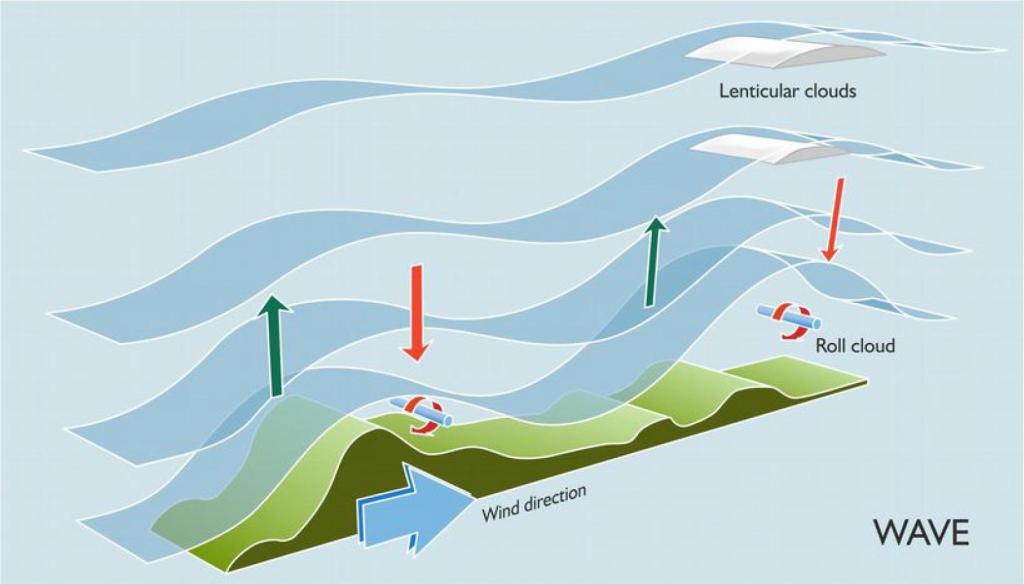
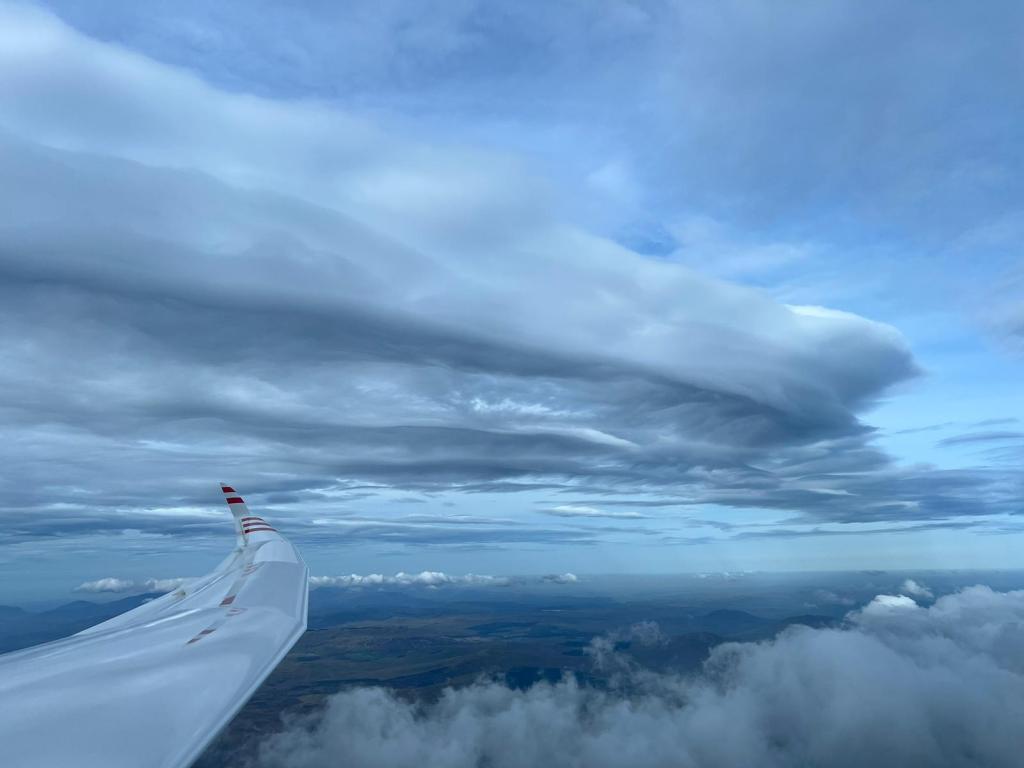
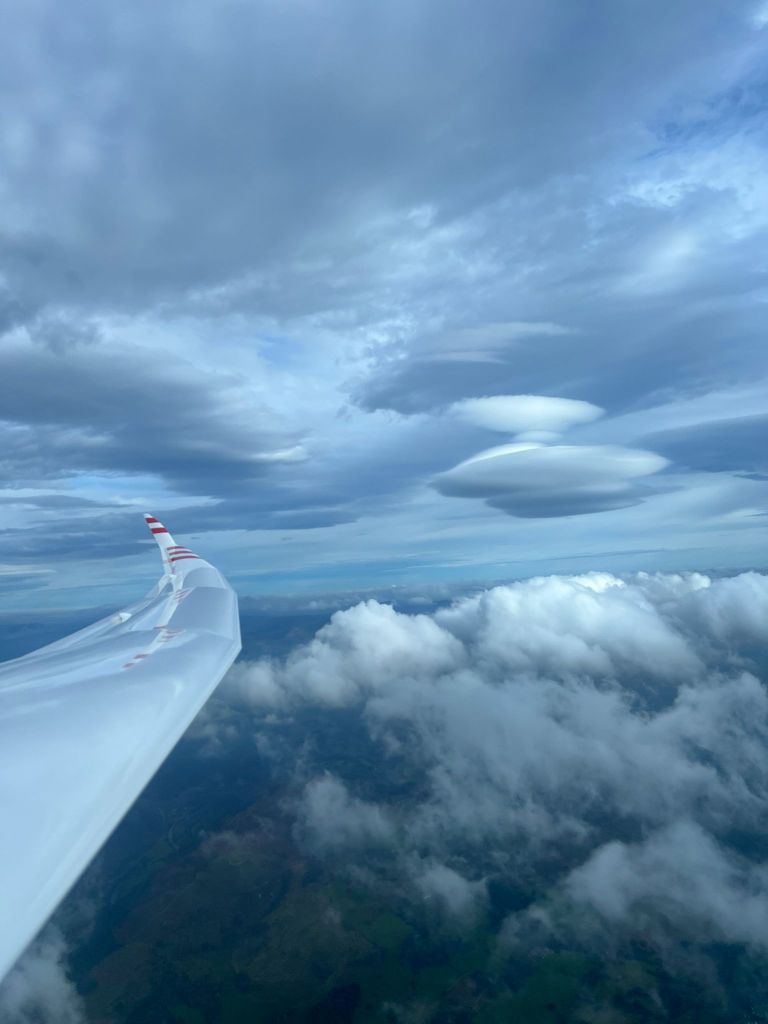
Appearance
- Wave bars looks like the ripples on the surface of a shallow river.
- Typically arranged in lines across the wind.
- Upside-down saucers, often stretched.
- Can be stacked.
Video
Brief Video illustrating wave formation.
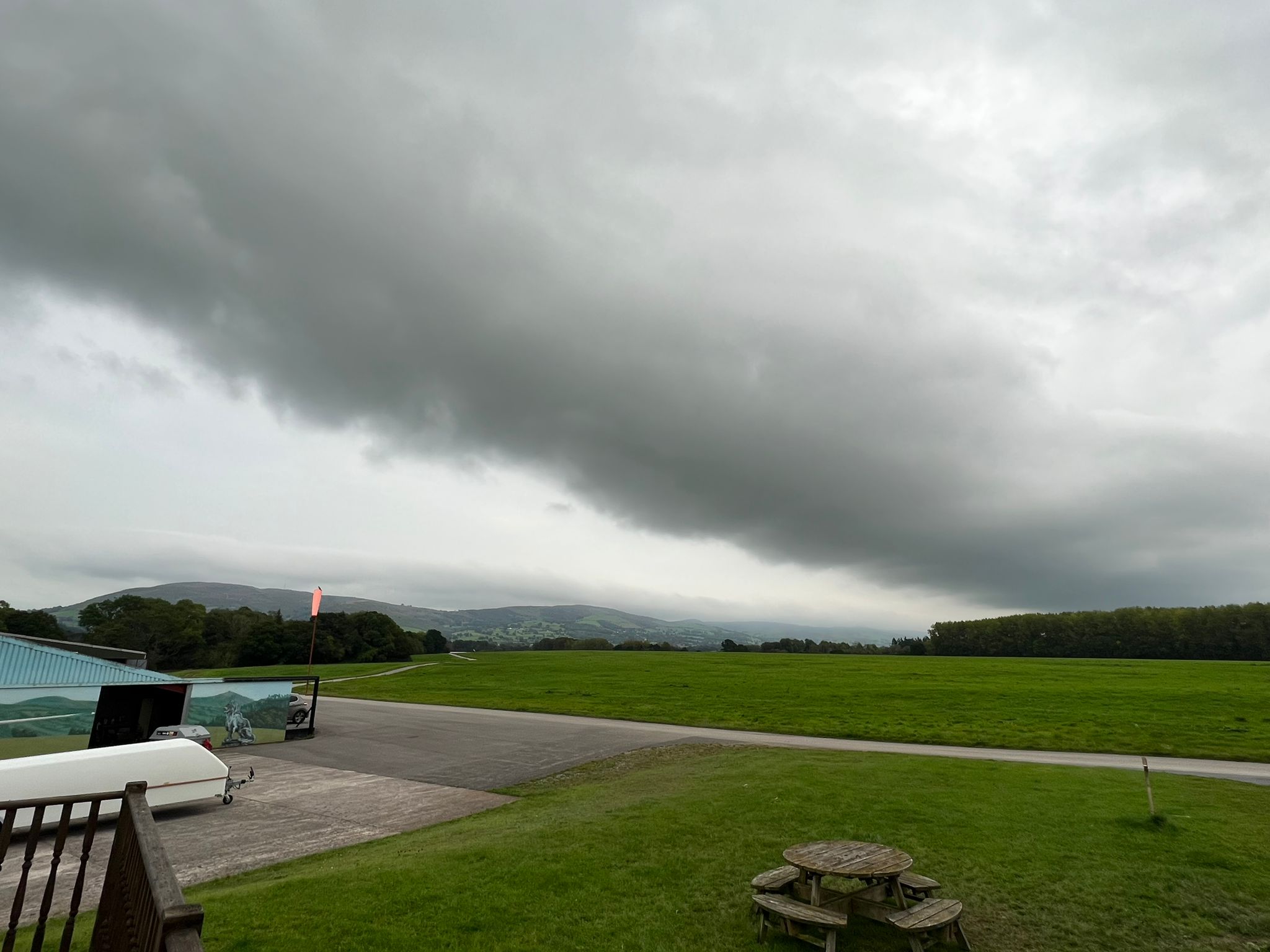
Note:
- The wave bar is stationary
- The air is clearly moving through it
- The bar is downwind of the ridge that triggered it
- The bar is offset from the wind by 30 degrees or so, aligned with the ridge. Wind is blowing from bottom left to top right of the image.
- Thanks to Chris Gill for the video.
Depth
- Wave can set up in layers of air thousands, or tens of thousands, feet deep.
- The rising and sinking air extends vertically for the full height of the air layer they occupy.
- These layers can start close to ground level.
- Their effects (Rotor) can be felt down to ground level.
Stationary
- The wave patterns tend not to move much.
- The air moves through the wave bar, sometimes forming cloud in the rising air, and dissipating in the sinking air, to form a cap along their length: lenticular clouds.
Triggers
- Ground features: Ridges, Mountains.
- Thermals protruding into the stable air layer above.
- The descending air bounces to become the Primary Wave Bar.
- Depending on conditions, more wave bars set up parallel to and downwind of the primary.
Associated with:
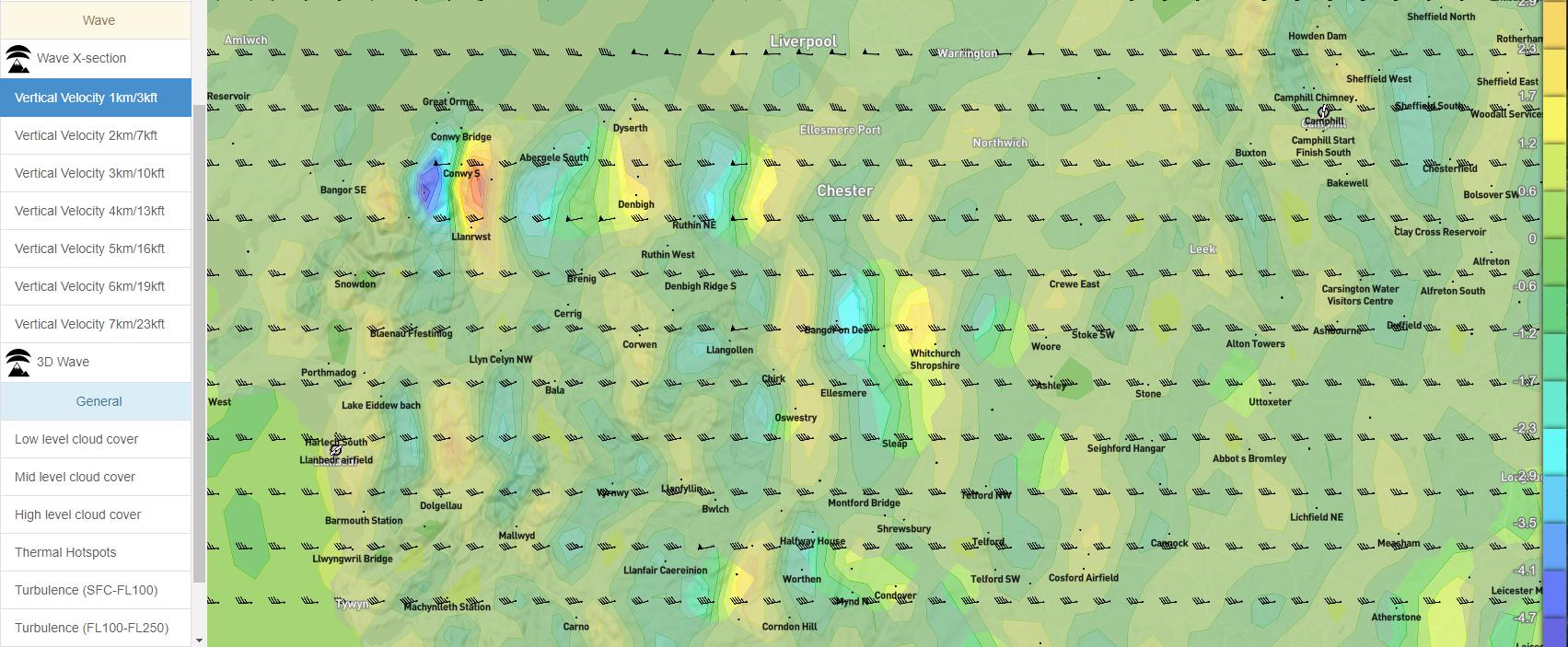
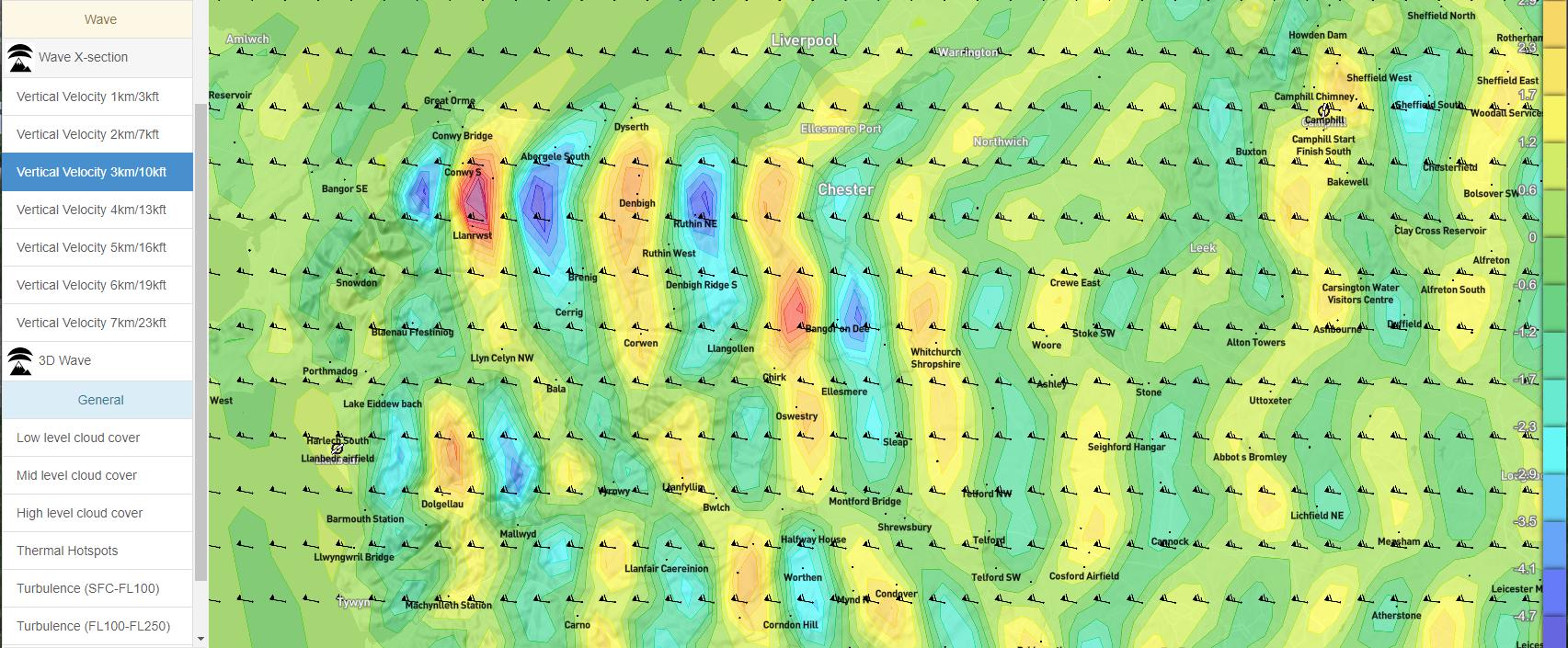
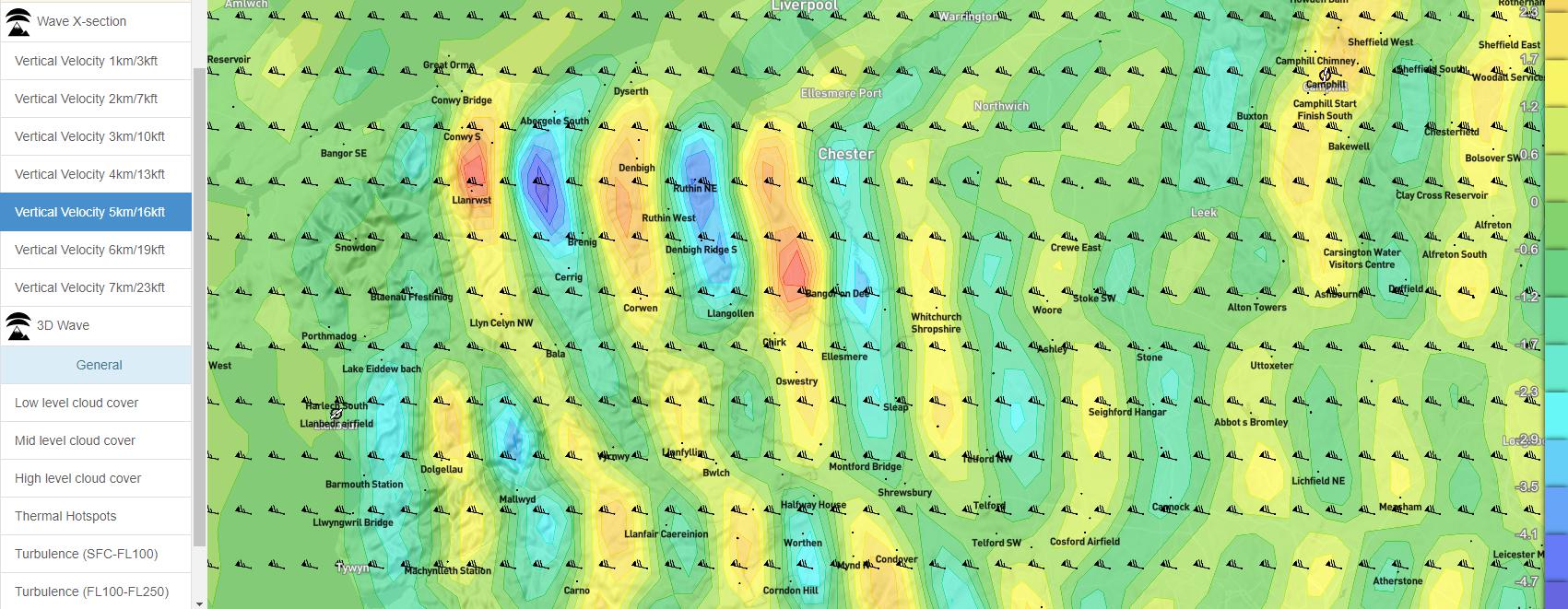
- Wind speed increases with height
- Constant wind direction with height
- Lower layer of unstable air (to initiate the bounce), a stable layer above (to propagate the bounce), and an unstable layer above that (to allow the bounce).
- Wind speed 15+ Kts over ridges
- Parallel isobars over long distances (e.g. a High sitting over Germany sets up westerly wave in the UK).
Features
- Wave is smooth.
- Rotor is not.
- Climb rates: Zero to 10+ knots.
- High wind speeds
- Sink and cloud downwind
How do we use Wave?
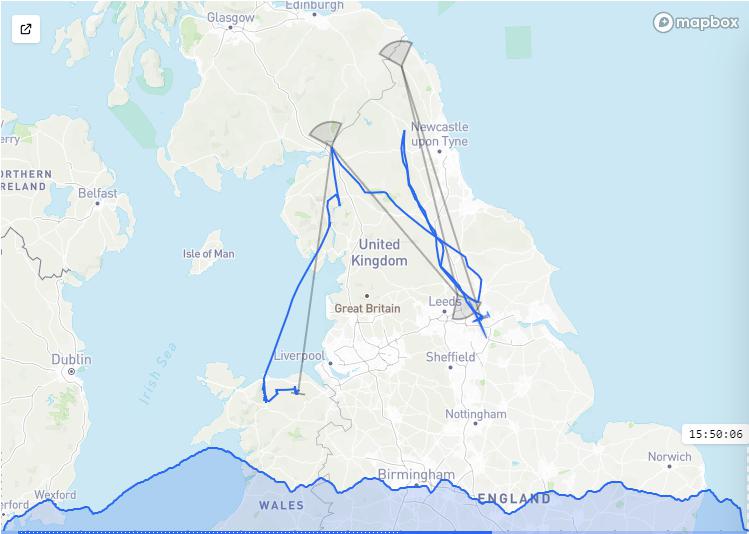
- Lift: height gains of tens of thousands of feet.
- Cross-country: fly along the wave bars for tens, or hundreds of Km.
- Or simply to sustain our flight locally.
Accessing Wave
- Aerotow to the wave bar.
- Thermals can be wave enhanced:
- climb to cloud base, beneath the wave bar,
- push forward into wind, to penetrate into the wave.
- This may involve climbing in rotor.
- Ridge
- climb on the ridge
- push into wind in areas of strongest lift.
- This may involve climbing in rotor.
- Turn across the wind in the strongest lift.
Optimising the Climb
Vertical Movement, Up and Down
- The strongest lift is upwind of the wave cap.
- There is no vertical movement at the wave cap, nor in the trough.
- The air is descending downwind of the wave cap.
Climbing
- Find and stay in the strongest lift:
- Upwind of wave bars
- In the whispies, forming just ahead of the bar
- GPS snail trail – set it to show climb rate or Netto
- Better lift may be found in the next wave bar upwind. Transition into wind in the areas of least sink (at the ends of the bar).
Safe Flying
Gotcha’s
- Turbulence, from ground level into the Rotor
- Beware Max Rough Air Speed
- Strong Sink
- Escaping it may necessitate flying downwind, which will be rapid
- High Wind Speeds
- Can carry the glider downwind (into sink, airspace, or away from a safe landing area)
- Crabbing may be extreme – progress along the bar may be very slow
- Ground speed into wind will be very slow, and / or consume a lot of height
- Low Temperatures
- Comfort, concentration
- Airframe cooling, near clouds – icing and gel coat damage
- Oxygen Depletion
- Use O2 to avoid hypoxia
- Refer to the BGA’s Oxygen recommendations
- True Airspeed (TAS)
- is Higher than Indicated Air Speed (IAS). Read the Flight Manual
- Stall Speed increases
- it may remain at or around the indicated value… TAS is rising
- Vne occurs at lower IAS values
- and may become the stall speed
- Cloud Cover
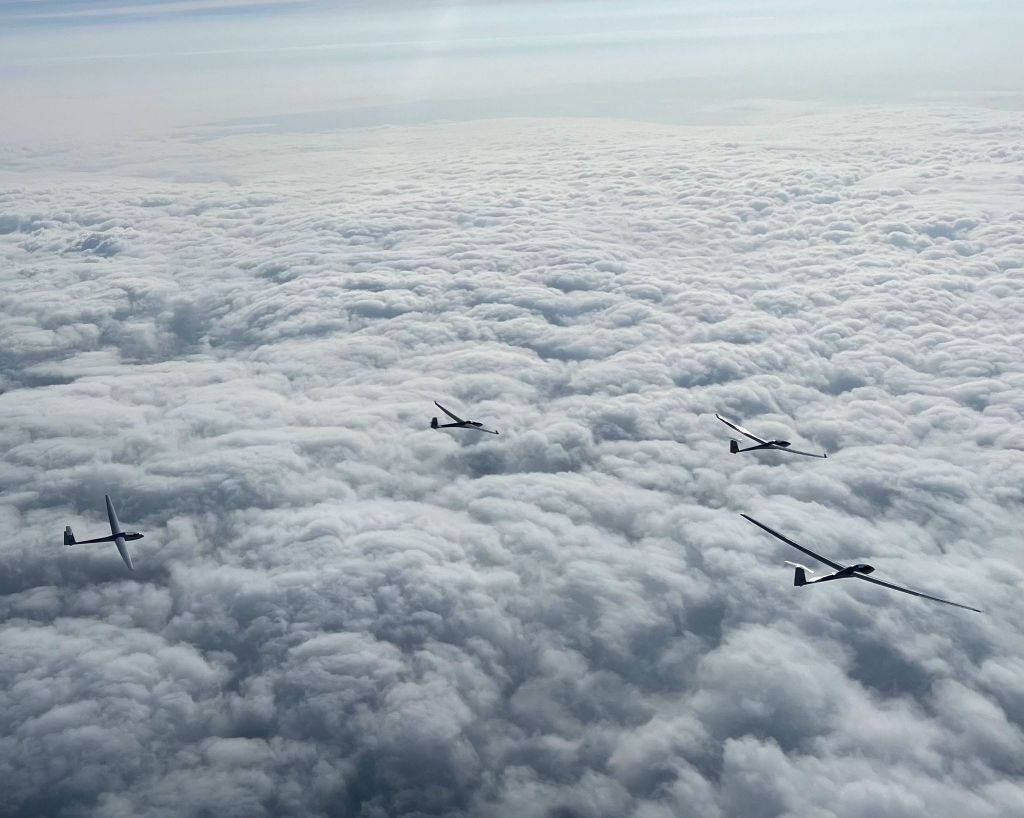
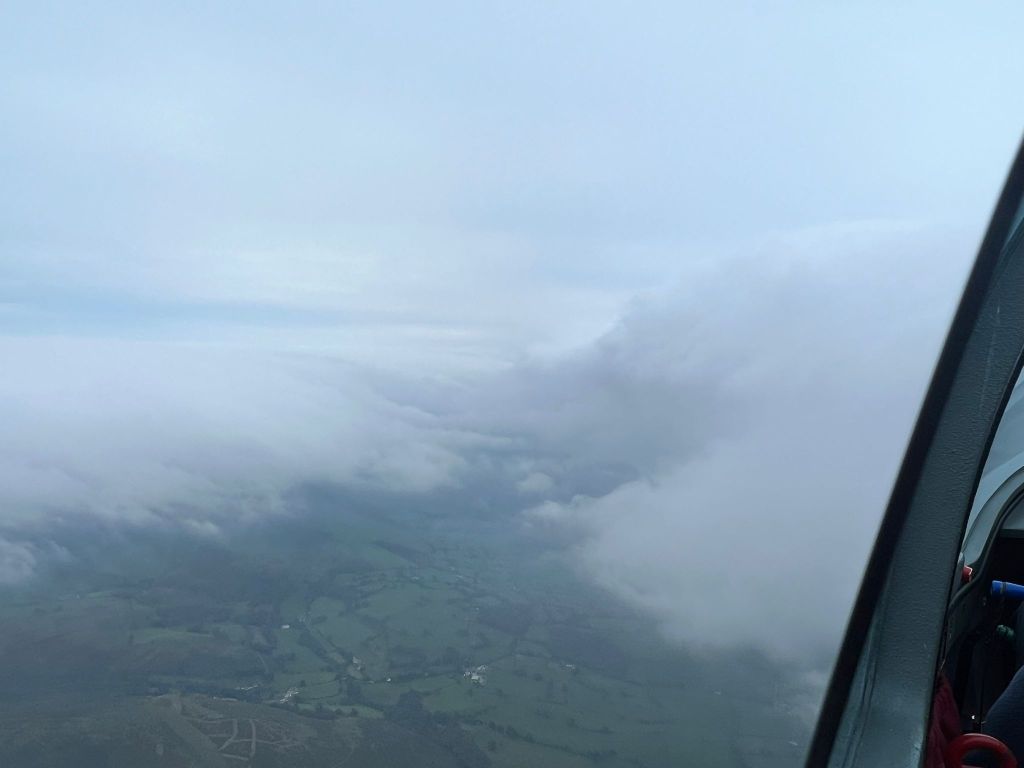
- Wave bars expand and contract, forming cloud sheets, above, below and around you.
These wave bars are merging in the distance:
Lookout
- Track and Heading will diverge greatly
- FLARM’s 12 o’clock is based on Track, not ahead
- Gliders will tend to fly in the same space relative to a wave bar, increasing the risk of collision.
Situational Awareness
- Disorientation: above cloud, difficulty in picking out detailed ground features
- Distances travelled do not match expectations
Recap
- Where and when does wave form?
- How can you access it?
- How is Indicated Air Speed affected by height?
- When should you use Oxygen?
- How is Lookout affected?
TEM
Threats
Collision
Mitigation:
- Maintain thorough lookout.
Loss of situational awareness
Mitigation:
- Understand and make use of navigational equipment.
Failure of Navigational equipment
Mitigation:
- Monitor performance of equipment and have a backup plan.
Failure of Oxygen equipment
Mitigation:
- Understand your equipment and monitor its performance.
Errors
Running out of height for appropriate circuit
Mitigation:
- Monitor height and position.
Climbing too high without oxygen
Mitigation:
- Carry, prepare and use oxygen equipment above 10,000′, or sooner.
Being blown downwind
Mitigation:
- Use appropriate navigational equipment and maintain awareness.
Inadvertent penetration of airspace
Mitigation:
- Use appropriate navigational equipment with current airspace files.
Over-speeding at altitude
Mitigation:
- Monitor airspeed against table of speed restrictions at altitude.
 glidingschool.com