In this lesson, we will demonstrate the secondary effect of the ailerons.
Learning Points
We have seen already that the ailerons are used to roll the glider. The instructor cheated a little in the previous demonstration, as she was applying a co-ordinating rudder movement. What happens if we use the ailerons on their own? It depends to some extent on how quickly we are flying.
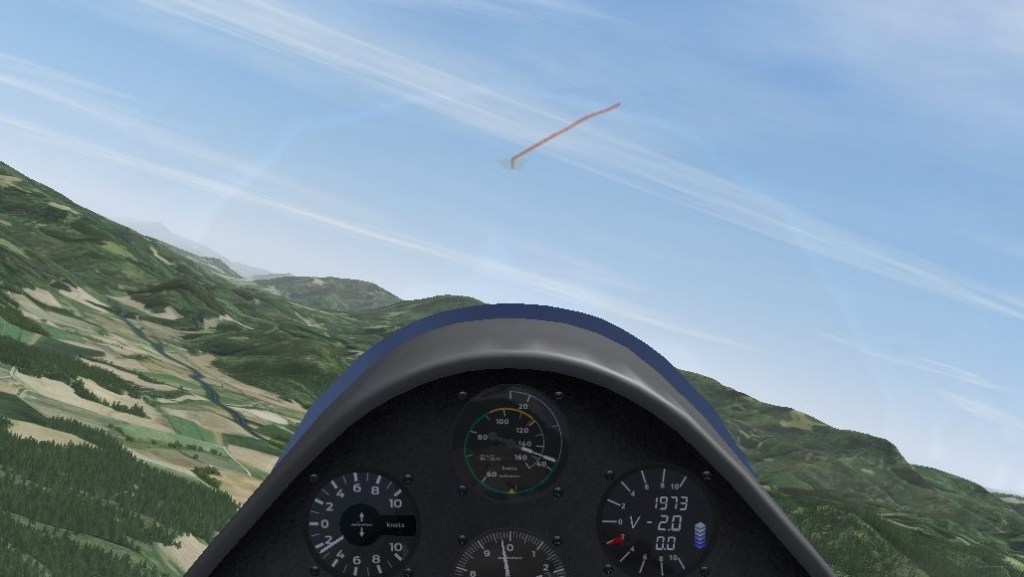
When flying slowly, and rolling without rudder, the glider will initially yaw markedly in the opposite direction as it slips into a badly coordinated turn in the direction of the roll (watch the string flick away from the turn, as shown in the picture above!). This effect is called ‘adverse yaw’ and is a result of aileron drag on the upgoing wing.
When flying more quickly and rolling without rudder, the yaw effect is less marked, but a sideslip will be seen in the turn (check the string).
If we use the aileron and rudder together, we can make a coordinated turn, meaning there is no yaw as we turn. This is confirmed by seeing the string point backwards at all times
Demonstration
This demonstration is not the way to fly! Your goal is always to fly ‘coordinated’, using matching aileron and rudder movements together. This shows what happens when you apply aileron without coordinated rudder.
Alternative Video without animation.
Further Reading and References
- Gliding From Passenger to Pilot, 2nd Edition: Pages 35-36, 88
- BGA Instructors’ Manual, 4th Edition: Section 2, Chapter 7, Page 7-3
- BGA Instructors’ Reference Cards: Ex 6
- Gliding: The British Gliding Association Student Pilot Manual, Section 4.2 and website.
Updates
The GlidingSchool.com lessons were developed for Condor2. They will be updated from time to time. Visit the Downloads page for news of updates, and to request the latest version.
Comments and Feedback
Your comments and feedback would be welcome. Visit the Contact page to send your thoughts.
Forums
Join us on the Forums provided by Condor Soaring and GliderPilot.net (the URAS forum).
 glidingschool.com